Binance is widely recognized as one of the largest and most influential cryptocurrency exchanges in the world. For users searching "how is Binance exchange," the answer often depends on what they prioritize: trading volume, asset variety, fees, or security. Founded in 2017, Binance has grown from a simple trading platform into a comprehensive ecosystem that includes spot trading, futures, staking, NFTs, and even its own blockchain, Binance Smart Chain. As of 2025, the exchange continues to dominate the market, but it also faces ongoing regulatory scrutiny and competition.
One of the most frequently cited strengths of Binance is its extensive range of supported cryptocurrencies. With over 350 coins and tokens available for trading, users can access both major assets like Bitcoin and Ethereum, as well as smaller altcoins and new project launches. This variety makes it attractive for traders who want to diversify or chase early-stage opportunities. Additionally, Binance offers some of the lowest trading fees in the industry, starting at 0.1% per trade and decreasing further for high-volume traders or those holding the native BNB token. For many users, these low fees are a major draw.
Security is another critical aspect of any exchange evaluation. Binance has experienced security incidents in the past, including a notable hack in 2019, but it has since invested heavily in security infrastructure. The exchange uses two-factor authentication (2FA), withdrawal whitelisting, and a Secure Asset Fund for Users (SAFU) that provides an insurance fund to cover potential losses. While no exchange is completely risk-free, Binance's security measures are generally considered robust by industry standards.
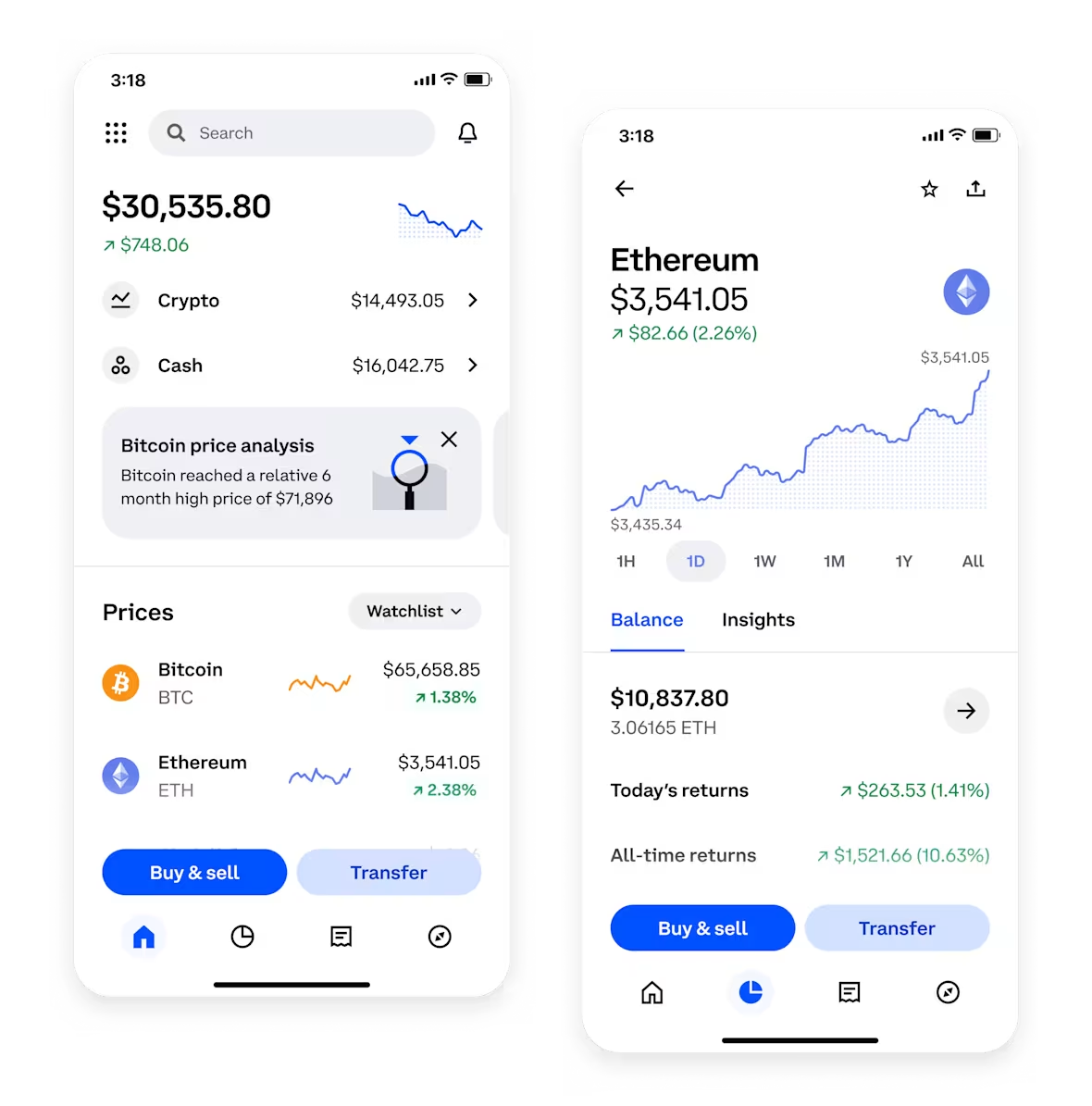
User experience also plays a big role in how people rate this platform. The interface can feel overwhelming for beginners due to the sheer number of features and order types available. However, Binance offers a "Lite" mode that simplifies the view for new users, and the mobile app is well-regarded for its speed and functionality. For advanced traders, the platform provides charting tools, API integration, and margin trading options. One common criticism is that customer support can be slow during high-demand periods, though response times have improved in recent years.
Regulatory challenges remain a key concern. Binance has faced restrictions or operational changes in several major markets, including the United Kingdom, Japan, and Canada, due to how it handles compliance with local laws. In response, the exchange has launched regional platforms, such as Binance.US, to operate within local regulatory frameworks. For users considering signing up, it is important to verify whether Binance is fully available and compliant in their country.
In terms of liquidity, Binance is consistently ranked among the top exchanges globally. This means that orders placed on the platform are typically filled quickly, with minimal slippage even for large trades. This is a crucial advantage for day traders and institutional investors. The exchange also supports a variety of payment methods, including bank transfers, credit cards, P2P trading, and third-party payment providers, making it easier for new users to fund their accounts.
Finally, users often ask about additional features like staking, savings, and the Launchpad for new token sales. Binance offers competitive staking rates for proof-of-stake coins, as well as flexible and locked savings products that allow users to earn interest on their holdings. The Launchpad platform has also launched several high-performing projects, though participation often requires holding BNB tokens. For those seeking passive income from crypto, these features are an added bonus.
To summarize, the question "how is Binance exchange" is best answered by considering its strengths in variety, liquidity, and low fees, balanced against regulatory uncertainties and a steep learning curve for beginners. While it may not be the perfect fit for every user—especially those in jurisdictions with strict rules—it remains a top choice for traders who value depth of market and a wide range of crypto services. As with any exchange, users should practice good security habits, start with small amounts, and stay informed about local regulations.